Athens · Peloponnese · Road Trip
10 Day Greece Itinerary: Athens and the Peloponnese
A rewarding first trip through ancient cities, Venetian castles, legendary landscapes and some of mainland Greece’s most beautiful beaches.
Ten days in Greece is enough for an unforgettable journey—if you resist trying to see everything. This 10 day Greece itinerary combines Athens with a focused Peloponnese road trip, giving you world-famous archaeology, seaside towns, mountain scenery and meaningful time beside the Ionian Sea.
This is not a “see Greece in ten days” checklist. Greece is far too varied for that. It is a carefully paced mainland itinerary through places connected with Mycenaean kings, Byzantine emperors, Venetian fortresses and Homer’s Odyssey. If you are inspired by ancient stories, explore our overview of the real places behind the Odyssey before you travel.
The Perfect 10 Day Greece Route at a Glance
| Day | Route and highlights | Suggested overnight |
|---|---|---|
| 1 | Arrive in Athens; Plaka and sunset viewpoint | Athens |
| 2 | Acropolis, museum and Ancient Agora | Athens |
| 3 | Corinth Canal, Acrocorinth and Nafplio | Nafplio |
| 4 | Mycenae, Tiryns and Epidaurus | Nafplio |
| 5 | Mystras and Sparta | Sparta/Mystras |
| 6 | Ancient Messene and Kalamata | Kalamata |
| 7 | Palace of Nestor, Pylos and Gialova | Pylos/Gialova |
| 8 | Voidokilia Beach and Nestor’s Cave | Pylos/Gialova |
| 9 | Methoni Castle; relaxed coast day | Pylos/Gialova |
| 10 | Return to Athens via Nemea; departure or final night | Athens |
The road portion is roughly 620 miles (1,000 km), depending on detours. Driving times below are estimates and do not include stops. Build margin into every day: mountain roads, summer traffic and the irresistible urge to photograph the landscape will slow you down.
10 Days in Greece: Day-by-Day Itinerary
Day 1 · Arrival
Arrive in Athens and ease into Greece
After a transatlantic flight, keep the first day simple. Check into a central hotel near Plaka, Monastiraki, Koukaki or Syntagma and explore on foot. Walk beneath the Acropolis, have an early dinner and watch the city turn gold from Areopagus Hill or a rooftop terrace.
Do not collect the rental car yet. Central Athens has excellent public transport, while parking and dense traffic add stress. From the airport, use the metro, airport bus or a licensed taxi. Save your energy for the Acropolis the next morning.
Day 2 · Athens
The Acropolis, museum and ancient city
Book the first available Acropolis entry you can comfortably reach, especially between June and September. Continue to the Acropolis Museum, then take a long lunch before visiting the Ancient Agora. These three places give a coherent introduction to classical Athens without turning the day into a museum marathon.
In the evening, wander through Anafiotika and Plaka. Comfortable shoes are essential: ancient paving is polished, slopes are common and summer stone radiates heat. Check official ticket arrangements shortly before the trip because entry systems and seasonal hours can change.
Day 3 · About 100 mi / 160 km
Athens to Nafplio via Corinth and Acrocorinth
Collect your car in the morning and follow the motorway west. Stop briefly at the Corinth Canal, then climb to Acrocorinth, one of Greece’s most impressive fortress sites. Its walls preserve layers of Greek, Roman, Byzantine, Frankish, Venetian and Ottoman history, while the view explains why this rock controlled the passage into the Peloponnese.
Continue to Nafplio and spend the late afternoon along the waterfront and lanes of the old town. Nafplio is romantic but also strategically useful: it places Mycenae, Tiryns and Epidaurus within easy reach.
Day 4 · Argolis loop
Mycenae, Tiryns and Epidaurus
Begin at Mycenae before tour groups and midday heat peak. Walk through the Lion Gate, see Grave Circle A and climb toward the palace where later tradition placed Agamemnon. The official Hellenic Heritage guide to Mycenae provides current visitor information and identifies the site as about 30 minutes from Nafplio.
Continue to Tiryns, whose enormous Cyclopean walls feel surprisingly intimate, then finish at the sanctuary and theatre of Epidaurus. If three sites sound exhausting, prioritize Mycenae and Epidaurus and save time for Nafplio’s Palamidi fortress. Quality matters more than collecting ticket stubs.
Day 5 · About 90 mi / 145 km
Nafplio to Byzantine Mystras and Sparta
Drive through the interior to Mystras, the ruined Byzantine city that rises above the Spartan plain. Churches, palaces, gates and steep paths unfold across the hillside. Allow at least three hours, carry water and choose your entry point with the climb in mind. Current access details are available from the official Mystras visitor page.
Spend the night in modern Sparta or closer to Mystras. Ancient Sparta has fewer monumental remains than many visitors expect; its power was social and military, not expressed through lavish architecture. That contrast is part of the story.
Day 6 · About 75 mi / 120 km
Ancient Messene and Kalamata
Travel west through Arcadian and Messenian scenery to Ancient Messene. The remarkably legible city includes a stadium, theatre, sanctuaries and fortifications in a broad green valley. Give it an unhurried half-day rather than treating it as a minor stop.
Continue to Kalamata for the evening. Walk the waterfront, taste local olives and look south toward the Mani. Kalamata breaks the journey naturally and offers plentiful restaurants, hotels and services before the quieter western coast.
Day 7 · About 45 mi / 72 km
The Palace of Nestor, Pylos and Gialova
Drive to the Palace of Nestor near Chora, the best-preserved Mycenaean palace on mainland Greece. Its throne room, archives and storerooms help transform Homeric kingship from abstraction into place. The official Palace of Nestor page has current access information; the site is about an hour from Kalamata.
Continue to Pylos for lunch overlooking Navarino Bay, then settle in Pylos or Gialova for three nights. This slower base is deliberate. It creates room for beaches, weather changes and the pleasure of staying somewhere long enough to recognize it.
Day 8 · Nature and myth
Voidokilia Beach, Old Navarino and Nestor’s Cave
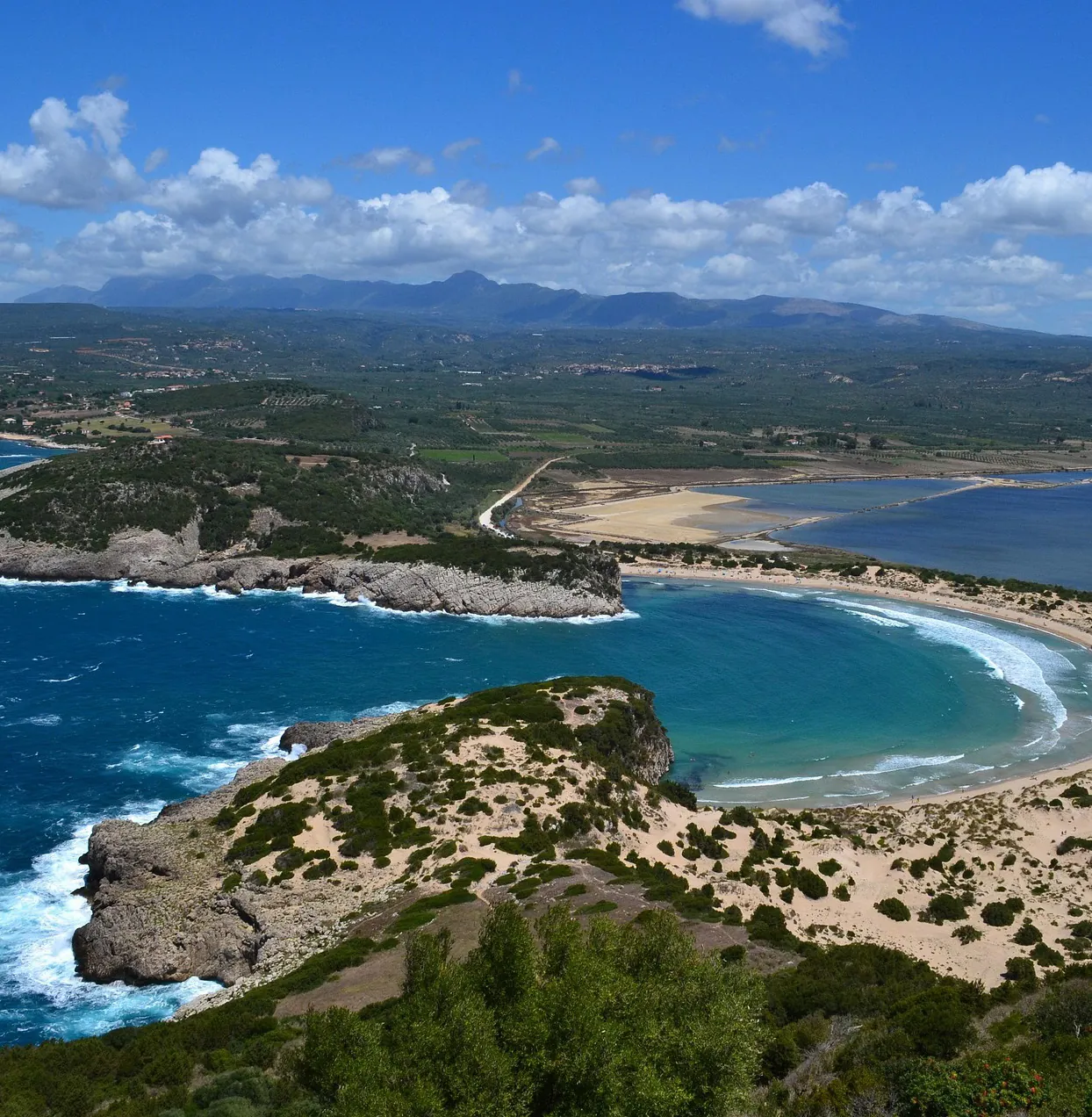
Voidokilia’s near-perfect crescent is among the most photographed beaches in Greece. Arrive early, bring water and leave no trace. The protected lagoon and dunes are ecologically sensitive, so stay on established paths and respect seasonal restrictions.
Strong walkers can climb toward Old Navarino Castle and the cave traditionally associated with Nestor’s cattle. The path is rough, exposed and unsuitable in extreme heat or poor conditions. The reward is a panoramic view of beach, lagoon and sea—a landscape where nature, history and mythology overlap.
Day 9 · Coastal Peloponnese
Methoni Castle and a slow afternoon by the sea
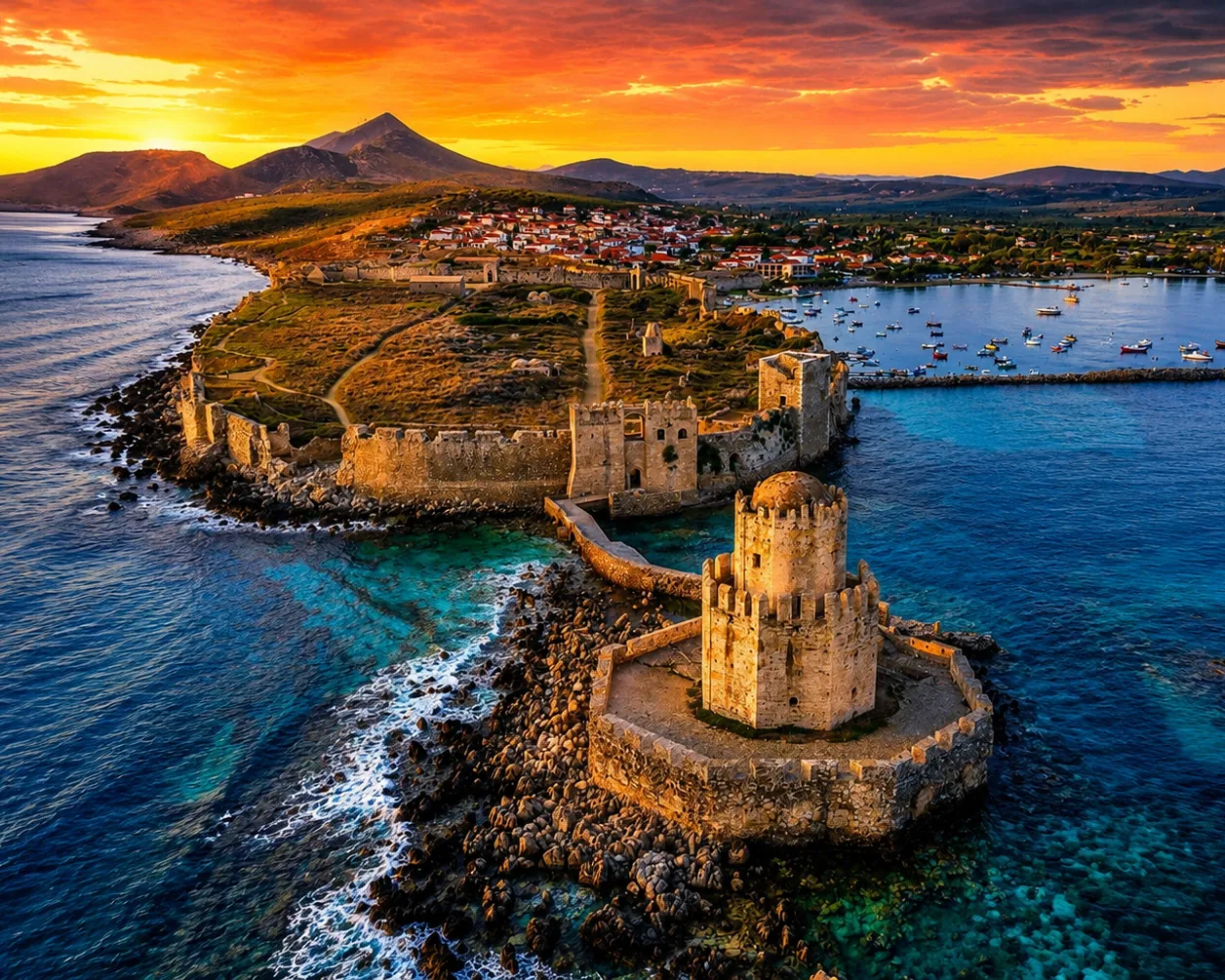
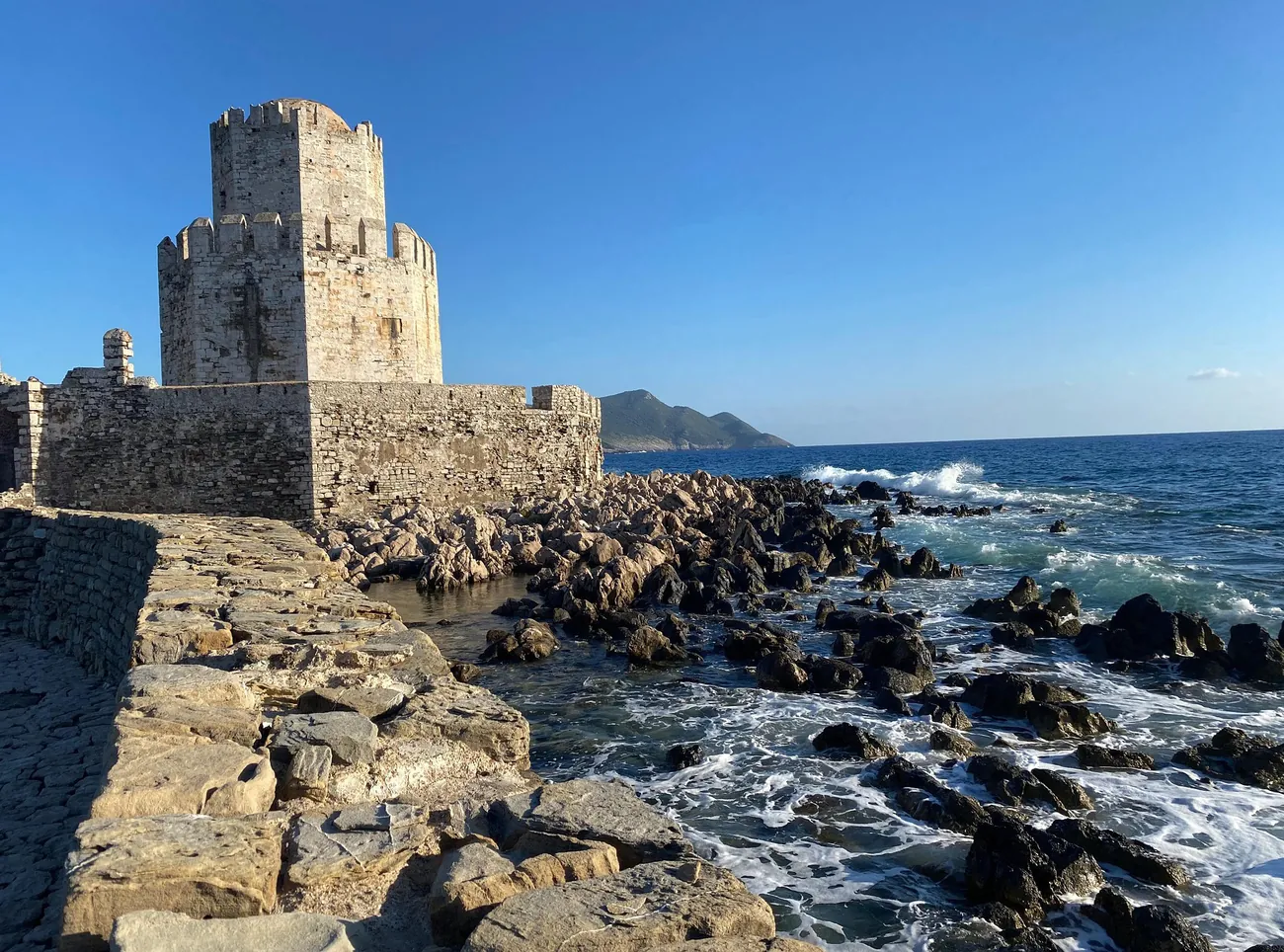
Drive south to Methoni. The vast Venetian fortress projects into the water and ends at the octagonal Bourtzi tower, joined to the mainland by a stone causeway. Allow time to explore the walls and sea views, but expect exposure to sun and wind.
Use the afternoon according to your energy: swim, linger over lunch, visit nearby Koroni, or return to Gialova. This itinerary intentionally avoids packing another major site into the day. One spacious afternoon can be more memorable than three hurried attractions.
Day 10 · About 185 mi / 300 km
Return to Athens, with an optional Nemea stop
Leave early for Athens. If your flight departs the same day, allow a generous safety margin for fuel, tolls, traffic and the rental-car return. An evening flight may permit a stop at Ancient Nemea, but only if timing is comfortable.
The safer plan is a final airport or Athens night and departure on day eleven. If ten days includes both transatlantic arrival and departure, drop Nemea and protect the core itinerary. Never plan a long Peloponnese drive against a tight international check-in.
Where to Stay on This Greece Itinerary
Athens · 2 nights
Koukaki and Plaka suit first-time sightseeing; Syntagma is convenient for transport. Confirm elevator access if mobility or heavy luggage is a concern.
Nafplio · 2 nights
Stay inside the old town for atmosphere or just outside it for simpler parking. Ask the hotel exactly where guests can leave a car.
Sparta/Mystras · 1 night
Choose Sparta for services or a countryside property near Mystras for calm and mountain views.
Kalamata · 1 night
The waterfront is best for an evening stroll; the historic center offers restaurants and urban character.
Pylos/Gialova · 3 nights
Pylos has a handsome square and harbor; Gialova places you closer to beaches and the lagoon.
Driving in Greece for US and Canadian Travelers
A car unlocks this route, but the experience differs from North American driving. Motorways are modern and tolled; rural roads can be narrow, winding and poorly lit. Distances that look short may take longer than expected.
- Reserve an automatic early. Manual cars are common and automatics cost more.
- Confirm licence requirements. Ask the rental company whether it requires an International Driving Permit in addition to your valid home licence.
- Understand insurance. Read exclusions, excess amounts and credit-card coverage before collection.
- Avoid night driving. Rural roads, animals and unfamiliar junctions are easier in daylight.
- Keep speed conservative. Do not copy aggressive local driving.
- Carry a payment card and some cash. You may encounter tolls and small businesses with different payment arrangements.
US travelers can review the State Department’s driving abroad guidance. Canadian travelers should consult the Government of Canada’s current Greece travel advice. These official sources should take priority over older blog posts.
How Much Does a 10 Day Greece Trip Cost?
For two people sharing a room, a comfortable mainland trip commonly requires a mid-range budget for hotels, rental car, fuel, tolls, meals, attractions and parking—before transatlantic flights. Prices vary sharply by month and booking date, so fixed totals become misleading quickly.
| Expense | Practical planning range |
|---|---|
| Double room | About US$120–220 per night in shoulder season; more in premium locations and peak summer |
| Rental car | About US$45–95 per day before optional coverage; automatics often cost more |
| Food for two | About US$70–140 per day, depending on drinks and restaurant style |
| Fuel, tolls, parking | Allow a flexible road-trip fund; rates change |
| Sites | Budget separately and check official combination tickets or seasonal pricing |
Canadian readers should convert using the current exchange rate when booking rather than relying on a static CAD figure. Travel in May, early June, late September or October often brings better value than August.
Best Time for This Athens and Peloponnese Itinerary
May and early June offer long days, green landscapes and generally comfortable sightseeing. September and early October combine warm sea temperatures with softer light and fewer peak-season crowds. July and August are workable, but archaeological sites can be punishingly hot and coastal accommodation fills early.
Should You Add Santorini or Mykonos?
Not to this particular ten-day route. Adding an island flight or ferry would trade meaningful time for transfers and increase the risk of disruption. If a famous Cycladic island is essential, choose a different itinerary: Athens plus one island and a shorter Argolis loop.
This road trip’s advantage is continuity. The landscape connects the stories. Mycenae leads naturally toward Sparta, Messenia and the kingdom of Nestor. Travelers interested in cinema can also explore our guide to Odyssey filming locations in Greece.
Make the journey richer
Follow Odysseus Across Greece
Following Odysseus: The Real Journey Behind Homer’s Odyssey brings together archaeological sites, myths, filming locations and five ready-to-use itineraries in one beautifully illustrated digital guide.
$11.99 · Instant PDF download
Get the Travel Guide10 Day Greece Itinerary FAQ
Is 10 days enough for Greece?
Ten days is enough for Athens and one focused region. It is not enough to see the entire country. Athens plus the Peloponnese offers an excellent balance of archaeology, towns, road-trip scenery and beaches.
How many days should I spend in Athens?
Two nights give most first-time visitors one full sightseeing day. Add a third night if you want more museums, neighborhoods or recovery time after the flight.
Can I do this Greece itinerary without a car?
Athens is easy without a car, but the full Peloponnese route is not. Buses connect major towns, yet reaching multiple archaeological sites and beaches would require more time and careful coordination.
Is driving in the Peloponnese difficult?
Motorways are straightforward, while rural and mountain roads demand patience. Drive in daylight, allow extra time and reserve the transmission type you can operate confidently.
Where should first-time visitors go in Greece?
Athens is the essential starting point. The Peloponnese then provides Mycenae, Epidaurus, Nafplio, Mystras, Ancient Messene, Pylos and outstanding coastline without requiring domestic flights.
What should I skip if my trip is only nine nights?
Skip the optional Nemea stop and treat day ten as the return to Athens. If flight times are tight, remove the Kalamata overnight and drive from Mystras toward Pylos with a well-timed stop at Ancient Messene.
What is the best month for a Greece road trip?
May, early June, September and early October usually provide the best balance of weather, open services and manageable crowds.
A Greece Itinerary With a Story
The strongest journeys are more than sequences of attractions. This one begins in the civic world of Athens, enters the fortified kingdom of Mycenae, crosses the Spartan plain and reaches the western sea beside Nestor’s palace. History changes era by era, while the road keeps revealing why geography mattered.
Ten days will not finish Greece for you. It may do something better: give the country enough time to become specific—one fortress wall, one shaded square, one brilliant curve of sand—and leave you knowing exactly why you want to return.
Planning note: Driving times and budgets are estimates. Always confirm current tickets, opening hours, road conditions, licence requirements and travel advisories with official sources and your rental company before departure.