Homeric Greece · The Real Places
Is Ithaca a Real Place? Discover the Island of Odysseus
Ithaca is a real Greek island, a place of quiet harbours, forested hills and archaeological mysteries—and the homeland that gave Homer’s Odyssey its purpose.
For thousands of years, readers have followed Odysseus across stormy seas, past monsters, temptations and impossible choices. Yet every adventure in The Odyssey points toward one destination: Ithaca.
So, is Ithaca a real place? Yes. Ithaca—known in Greek as Ithaki—is a real island in the Ionian Sea, just northeast of Kefalonia and west of mainland Greece. It is small, mountainous and remarkably peaceful. Since antiquity, it has been identified as the kingdom of Odysseus, the hero whose ten-year struggle to return home forms the heart of Homer’s epic.
This distinction makes Ithaca more interesting, not less. It is simultaneously a beautiful Greek destination, a landscape preserved in cultural memory and one of the most compelling unresolved questions in Homeric geography.
Where Is Ithaca, the Real Island of Odysseus?
Ithaca belongs to the Ionian Islands of western Greece. It lies across a narrow channel from Kefalonia, surrounded by brilliant blue water and a coastline broken into sheltered bays. The island is roughly divided into northern and southern sections by a narrow isthmus at Aetos.
Vathy, the capital, curls around one of the Mediterranean’s largest natural harbours. In the north, Stavros provides the strongest concentration of places connected with the search for Homeric Ithaca. Kioni and Frikes offer the intimate harbour scenery many travellers imagine when they picture an Ionian island.
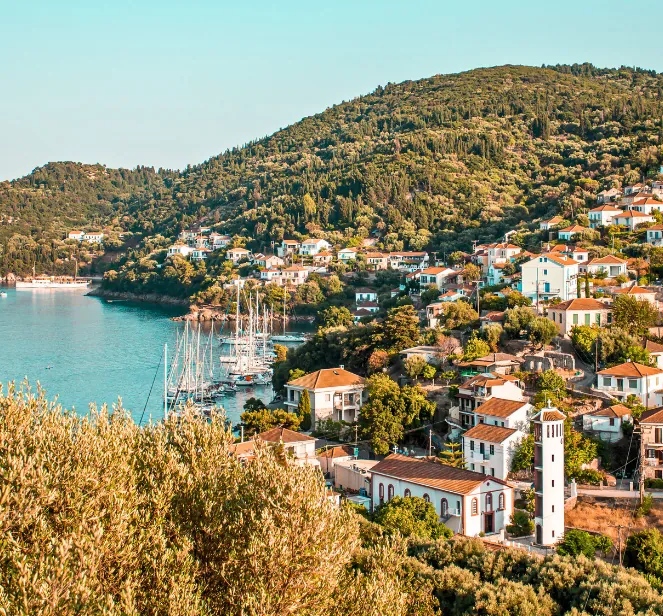
Ithaca is not a place of monumental scale. Its power comes from understatement: olive-covered slopes, pale stone, fishing boats, mountain roads and glimpses of neighbouring islands across the sea. It feels less like a stage for heroic display and more like the private home for which a tired traveller might genuinely long.
Why Is Ithaca Known as the Home of Odysseus?
In Homer’s story, Odysseus is king of Ithaca. He leaves the island to fight in the Trojan War and spends ten further years attempting to return. His voyage matters because Ithaca is waiting at its end: his wife Penelope, his son Telemachus, his household and the identity he risks losing during his wanderings.
The association between the modern island and the hero is not a recent invention created for tourism. Ancient traditions connected Ithaca with Odysseus, and archaeological finds show that the hero was worshipped there in later antiquity. Coins depicted him; offerings were dedicated in his name; and the island’s cultural identity developed around the memory of its legendary king.
The official Archaeological Collection of Stavros describes a second-century BC mask fragment inscribed with a prayer to Odysseus. This does not prove that every event in The Odyssey happened exactly as narrated. It does prove that people in the ancient world connected the hero with Ithaca strongly enough to honour him through cult and ritual.
What Does Homer Tell Us About Ithaca?
Homer presents Ithaca as rugged rather than wealthy: a difficult island, but a good home. It belongs to a group of islands associated with Dulichium, Same and wooded Zacynthus. Mount Neriton rises prominently, and harbours, caves, paths and springs shape the story of Odysseus’ return.
Some readers believe this description fits modern Ithaca convincingly. Others point to apparent geographical contradictions, particularly the island’s position in relation to Kefalonia. These differences have produced alternative theories identifying Homer’s Ithaca with Kefalonia, Lefkada or a landscape transformed by geological change.
Part of the difficulty is that The Odyssey is poetry, not a nautical chart. Homer may have blended real geography, inherited oral memory and imaginative storytelling. A place in epic can be recognisable without corresponding perfectly to every modern coordinate.
What Has Archaeology Revealed on Ithaca?
Archaeological research confirms that Ithaca was inhabited long before the classical period and during the centuries associated with the Mycenaean world. Evidence has been found at Pilikata, Aetos, the Cave of Polis and Agios Athanasios—the site widely known as the School of Homer.
Pilikata and northern Ithaca
Pilikata occupies a strategic position near Stavros, with views toward several harbours. Excavations revealed traces of long-term settlement and Mycenaean occupation. Its location led some early researchers to believe that the centre of Odysseus’ kingdom should be sought in northern Ithaca.
The Cave of Polis and the cult of Odysseus
The Cave of Polis, also called Loizos’ Cave, produced votive objects and bronze tripod fragments. Particularly important is the inscribed mask fragment carrying a dedication to Odysseus. The find establishes a concrete link between Ithaca and the ancient worship of the hero, even if it cannot identify a historical king behind the myth.
Aetos and Alalkomenes
At Aetos, the narrow link between the island’s two halves, an ancient settlement occupied a naturally defensible position. Coins bearing the head of Odysseus and the name of the Ithacans were discovered in the wider area. Finds from Aetos can be viewed in the Archaeological Museum of Vathy.
The School of Homer
Agios Athanasios, known as the School of Homer, contains a substantial complex built across terraces, with structures and water-management features spanning several periods. Excavators have proposed connections with a palace centre, but public claims that the palace of Odysseus has definitively been found remain disputed. Visitors should distinguish between an important archaeological complex and a proven identification.
Has the Palace of Odysseus Been Found?
No site is universally accepted as the palace of Odysseus. Several locations on Ithaca have been proposed, especially Pilikata, Aetos and the School of Homer. Each contributes evidence of settlement, strategic importance or later devotion to the hero; none provides an inscription saying that this was the Bronze Age residence of the man described by Homer.
There is also a deeper question: was Odysseus a historical ruler whose life became epic, a composite figure built from generations of stories, or a literary hero? Archaeology can recover buildings, pottery, weapons and trade networks. It cannot easily prove the biography of a character preserved through oral poetry.
That uncertainty should shape the way we visit. Ithaca is not an archaeological theme park with every location neatly labelled. It is a real landscape where history and cultural memory overlap. The search itself—conducted by archaeologists, historians, travellers and readers—is part of the island’s story.
Odyssey-Related Places to Visit on Ithaca
Travellers interested in the real places behind Homer’s Odyssey should allow time for both archaeology and the landscape. The following stops create a meaningful introduction.
Archaeological Collection of Stavros
The best starting point for finds from northern Ithaca, including objects that illuminate the island’s ancient relationship with Odysseus.
Archaeological Museum of Vathy
A valuable overview of Ithaca’s ancient history, with material from Aetos and other sites across the island.
Pilikata
A landscape associated with early settlement and the long search for the centre of Homeric Ithaca.
Aetos
The strategic ridge between northern and southern Ithaca, overlooking the channel toward Kefalonia.
Stavros
The northern village most closely connected with the island’s Odyssean identity and archaeological collections.
Vathy
The island capital and ideal base for understanding modern Ithaca as a living community rather than only a literary symbol.
Access conditions at archaeological sites can change, and some areas may be closed for protection or restoration. Check official information locally before setting out and never enter restricted excavations.
What Else Should You See on Ithaca?
The Odyssey provides the reason many visitors arrive, but Ithaca rewards travellers who move beyond a checklist. Spend time on the waterfront in Vathy. Follow the road north to Kioni and Frikes. Walk through Stavros, pause in village squares and look across the channel toward Kefalonia.
- Kioni: a protected traditional settlement arranged around a graceful harbour.
- Frikes: a small waterfront village and useful base for exploring northern Ithaca.
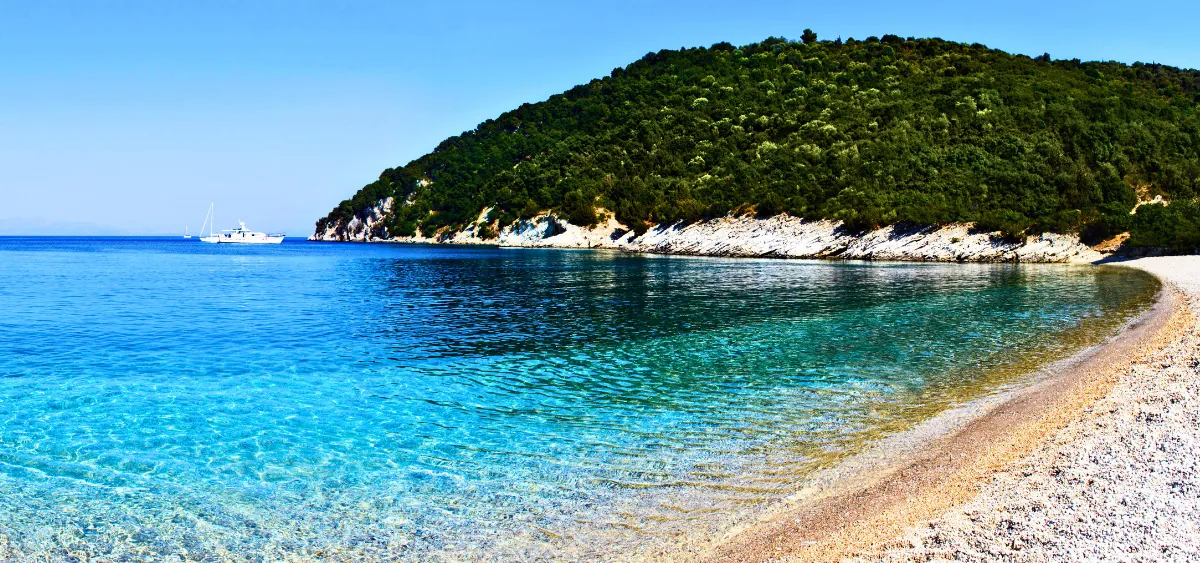
- Filiatro: an accessible beach near Vathy with exceptionally clear water.
- Afales Bay: dramatic northern scenery framed by high slopes and the open Ionian Sea.
- Anogi: a mountain village associated with old stone houses, landscape and walking routes.
- Monastery of Kathara: an elevated viewpoint offering a powerful sense of the island’s geography.
The most memorable moments may be the least monumental: the sound of rigging in a harbour, evening light across the hills or the sudden appearance of another island beyond an olive grove. Ithaca makes the concept of home feel geographical and emotional at the same time.
Why Ithaca Still Matters to Readers and Travellers
Many places in The Odyssey are defined by spectacle. The Cyclops’ cave is terrifying, Circe’s island is enchanted and the Sirens promise forbidden knowledge. Ithaca is different. It has no monster to defeat and no magical temptation to resist. Its power comes from belonging.
Odysseus repeatedly has opportunities to abandon the difficult journey home. Calypso offers him comfort and immortality. The Phaeacians receive him with generosity. Other lands might be richer or easier. Yet he continues toward the rocky island where his name, family and responsibilities are rooted. For modern readers, this transforms Ithaca from a point on a map into a universal idea: the destination that gives hardship a purpose.
That symbolism has influenced literature far beyond Homer. “Ithaca” has become shorthand for a desired homecoming, a life goal or the wisdom accumulated during a long journey. Travelling to the real island adds another layer to the metaphor. The famous destination becomes tangible without losing its mystery.
A destination for different kinds of travellers
Mythology enthusiasts come to compare the landscape with Homer. Archaeology-minded visitors look for evidence of Mycenaean settlement and the later cult of Odysseus. Walkers are drawn to old paths, elevated villages and views across the Ionian Sea. Sailors experience the island through the protected harbours that have shaped life here for centuries.
Ithaca also suits travellers who simply want a quieter Greek island. Its strongest appeal is not nightlife or large resorts. It is the opportunity to slow down, drive short mountain roads, swim in clear coves and spend evenings beside a harbour. The island works particularly well as part of a wider journey through Homeric Greece, after visiting Mycenae, Sparta and the Palace of Nestor in the Peloponnese.
This combination is precisely what makes Ithaca distinctive. You do not have to choose between mythology and a genuine holiday. The story leads you there; the island gives you reasons to stay.
How to Visit Ithaca
Ithaca has no airport. Most international visitors fly to Kefalonia and continue by ferry, or reach the island by sea from ports serving western mainland Greece and the Ionian Islands. Routes and timetables change seasonally, so confirm the current connection before finalising accommodation.
How many days do you need?
Two full days provide a useful introduction, but three or four days allow a more satisfying journey. With extra time, you can explore northern and southern Ithaca separately, visit museums without rushing, add a boat trip and experience the island after day visitors have departed.
Do you need a car?
A car is strongly recommended for travellers who want to connect Vathy, Stavros, Kioni, Frikes and the island’s archaeological landscapes. Roads are often narrow and winding, so plan realistic driving times and avoid treating the island as a race between stops.
When is the best time to visit?
Late spring and early autumn combine pleasant temperatures with a quieter atmosphere. July and August bring the greatest number of visitors and the widest range of seasonal services. Archaeological museums may operate different summer and winter schedules, so verify opening hours shortly before your visit.
Ithaca or Kefalonia: Which Island Should You Visit?
The best answer is often both. Kefalonia provides an airport, dramatic natural scenery and its own connection to debates about Homeric geography. Ithaca offers a quieter, more concentrated encounter with the tradition of Odysseus.
Choose Ithaca if your priority is literary atmosphere, small harbours, slower travel and the symbolic destination of The Odyssey. Add Kefalonia if you want a broader Ionian itinerary, easier flight access and the opportunity to consider alternative theories about the hero’s homeland.
Continue the journey
Follow Odysseus Beyond Ithaca
Following Odysseus: The Real Journey Behind Homer’s Odyssey brings together Homeric kingdoms, archaeological sites, ancient myths, filming locations and five complete itineraries across Greece.
Discover the Complete GuideFrequently Asked Questions About Ithaca and Odysseus
Is Ithaca a real place?
Yes. Ithaca is a real Greek island in the Ionian Sea, northeast of Kefalonia. It has been associated with Odysseus since antiquity.
Was Odysseus really king of Ithaca?
Odysseus is presented as king of Ithaca in Homer’s epic. Archaeology confirms Bronze Age settlement and later worship of Odysseus on the island, but it cannot conclusively prove that the literary hero was a historical king.
Has the palace of Odysseus been discovered?
Several Ithacan sites have been proposed, including the School of Homer, Pilikata and Aetos. No identification is universally accepted as definitive.
Where is Ithaca in relation to Kefalonia?
Ithaca lies immediately northeast of Kefalonia, separated from it by a narrow sea channel. Kefalonia is a common gateway for reaching Ithaca.
Can you visit Odyssey-related places on Ithaca?
Yes. Visitors can explore museums in Stavros and Vathy and see landscapes associated with the search for Homeric Ithaca. Some archaeological areas have restricted access, so local guidance is essential.
How long should you stay on Ithaca?
Allow at least two full days. Three or four days provide a better balance of archaeology, villages, beaches and unhurried exploration.
The Meaning of Ithaca
In the end, the importance of Ithaca does not depend on finding a labelled throne room or proving every line of Homer geographically. The island survives because it represents the place toward which a life is directed: home, identity, loyalty and the hope that a long journey has meaning.
Modern Ithaca gives that idea a physical form. You can cross the channel, walk its roads, swim beneath its hills and study objects left by people who honoured Odysseus more than two thousand years ago. The island is real. Its archaeological story is real. The questions surrounding Homer’s kingdom are real too.
Perhaps that is the most fitting conclusion. Odysseus’ journey was never simple, and neither is the search for his homeland. Ithaca does not offer a final answer. It offers something more enduring: a reason to keep travelling, reading and looking toward the horizon.
Research note: Archaeological context was checked against the official Hellenic Heritage entry for the Archaeological Collection of Stavros and the Municipality of Ithaca’s archaeological overview. Opening arrangements and site access may change; verify details with official sources before travelling.